

Name BNP Paribas Open
Dates March
Established 1976
Surface Outdoor Hard
Tour ATP/WTA
Tier ATP 1000 | WTA 1000
Prize-money Just over $9.4 million total for each singles draw in 2026. The men's and women's singles champions each receive around $1.2 million
Location The tournament is held at the Indian Wells Tennis Garden in the city of Indian Wells, California
The BNP Paribas Open at Indian Wells, once a small tennis fundraiser in Tucson, Arizona, has become the fifth-largest tennis tournament in the world. This remarkable expansion is primarily down to three men.
Have you heard the one about the Puerto Rican, the South African and the American database billionaire?
History
The story of Indian Wells started over 350 miles away in Arizona's second city.
The American Airlines Tennis Games, a non-tour event used to raise funds for the University of Arizona's cancer centre, was held in Tucson before upping sticks to California in 1976.
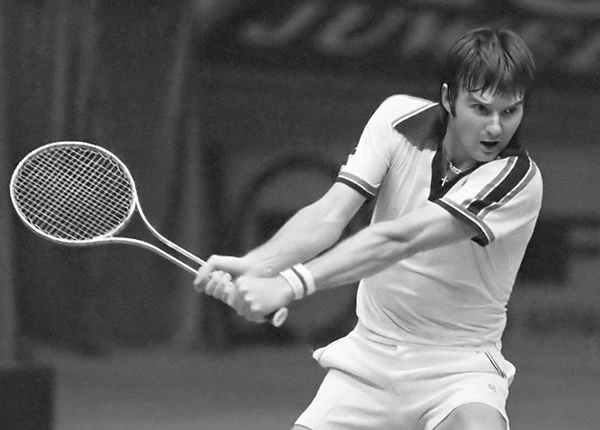
The Mission Hills Country Club, located in the resort city of Rancho Mirage, became its new home and 23-year-old Jimmy Connors (above) its first champion.
After a few years there, the ATP decided to sell the event to Disneyland Florida. That was before a local resident, and board member on the governing body, stepped in.
The Puerto Rican
Charlie Pasarell was born in San Juan, Puerto Rico's capital, in 1944.
He forged a successful playing career, ranking no.1 in the United States in 1967 and capturing 23 titles along the way.
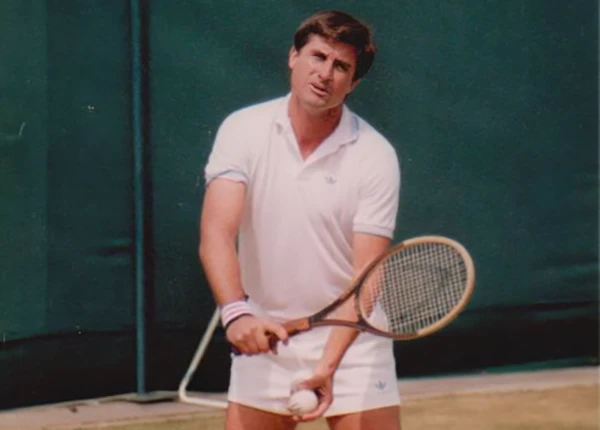
After retiring in 1979, Pasarell worked in coaching and administrative roles before his unlikely intervention in this tournament's sale.
"In those days, I didn't have even the slightest idea that I'd be running or owning a tennis tournament," Pasarell told the Desert Sun in 2015. "It wasn't until the ATP said, 'We've got to move this tournament out of the desert.' I said, 'Why?'"
One of Pasarell's post-retirement roles was that of Director of Tennis for Landmark Land Company. He asked the firm to build a tennis facility at La Quinta Hotel in the Coachella Valley, so that the competition could remain in the region.
Landmark acquiesced and a 7,500 seat stadium was constructed with Pasarell as the new tournament director.
Jimmy Connors, again, won the first edition of the Grand Marnier/ATP Tennis Games in 1981. The 1982 final famously saw Yannick Noah end Ivan Lendl's 44-match winning streak.
After a five-year stay at the luxury hotel, the event outgrew its surroundings. Another move was required but Charlie would need some help from an old friend to make it happen.
The South African
Raymond Moore was born in Johannesburg in 1946. He enjoyed a decent career in doubles, the crowning moment in 1974 when he was part of South Africa's victorious Davis Cup squad.
Pasarell invited Moore to form a business together (PM Sports Management) that would gather investment and find a new home for the expanding open. The result was the Grand Champions Hotel (now Hyatt Regency), completed in 1986 and boasting 11 courts and a 10,000 seat arena.
Indian Wells' prominent place in the tennis landscape was copper-fastened at the Grand Champions.
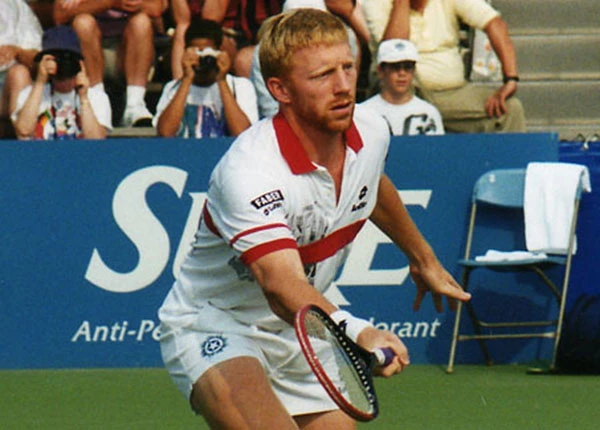
Boris Becker brought welcome attention with back-to-back titles in 1987 and '88. A women's event was finally added in 1989, much to Pasarell's delight, and the men's event was promoted to Masters Series status.
After so much European success in the 1980s, the following decade almost exclusively belonged to home stars.
On the men's side, the tireless Michael Chang was three times the champion (1992, 1996-7) while Pete Sampras and Jim Courier also picked up a couple of titles apiece.
That streak of American success extended to the women's draw as Martina Navratilova, Mary Joe Fernandez and Lindsay Davenport each grabbed a brace of titles.
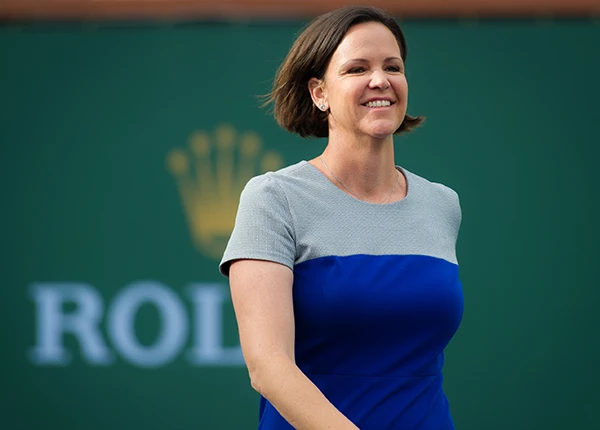
As the decade came to a close, rapid growth led to higher crowds and yet again, constraints on space. Charlie and Ray reached out to IMG, the sports management behemoth, for help.
IMG gave the duo the support needed to purchase new land in Indian Wells for the construction of a state-of-the-art tennis centre.
The Indian Wells Tennis Garden, featuring an enormous 16,000 seat stadium, was completed in 2000. The satisfaction of developing the new premises was curtailed by two incidents early in the new millennium.
One was unfortunate, the other unsavoury.
Off Court Challenges
ISL, a Swiss sports marketing company, pledged $1.2 billion over ten years to sponsor the Master Series events. The post-9/11 world contributed to them reneging on this agreement, jeopardising the tournaments. Thankfully, Pasarell and Moore were able to weather the financial storm and keep Indian Wells afloat. The next incident would not be resolved as quickly.
It's March 15, 2001. World no.3 Venus Williams is set to play her younger sister and world no.5, Serena, in the semi-finals. Four minutes before the contest, Venus pulls out with tendonitis. Serena then receives a walkover and is scheduled to face Kim Clijsters in the Saturday final.
Before that match starts, the sisters' father (Richard) along with Venus take their seats in the arena. A cacophony of boos and comments rain down on the pair, the crowd feeling slighted by Venus's semi-final absence.
In the days after, Richard alleged that his family were subjected to racist abuse. Serena - who went on to win the title - and Venus vowed not to return to Indian Wells.
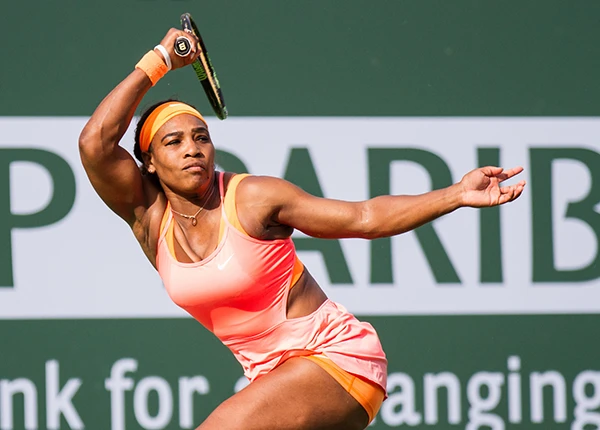
The sisters stuck to their pledge for well over a decade before the younger sibling stepped out in the Californian desert in 2015. Venus participated for the first time since the incident the following year.
The American Database Billionaire
Larry Ellison was CEO of the computer technology superpower Oracle, and a regular in the stands of the Tennis Garden, when Ray Moore reached out to him in 2008. Charlie and Ray were considering selling Indian Wells' slot in the professional calendar to buyers from Shanghai or Qatar.
Ellison, worth about $25 billion at the time, jumped at the chance to buy the tournament and the location for $100 million. “I thought it was inexpensive in terms of its value,” the entrepreneur told Bloomberg Business in 2015.

A man of rich taste and richer ambition, Ellison has transformed the tournament during his tenure.
With a little more time on his hands after stepping down from the top job at Oracle in 2014, the octogenarian has invested over $200 million into the grounds, adding a second main stadium (8,000 seats), enhanced landscaping, excellent player faciliteis and even a royal box.
However, there was another moment of shade for the Sunshine Double component in 2016. Ray Moore was forced to step down after stating that WTA players “ride on the coat-tails of the men”. Tommy Haas, the former world no.2, took over as tournament director that summer.
Despite that setback, Ellison's support for the event has been rewarded with enormous crowds (500,000+ in 2025) and superior tennis.
Like most venues on the men's tour, Indian Wells was dominated by the Big Three of tennis with thirteen titles between them from 2004-2017. There were also some notable one-time winners during that period including Juan Martin del Potro (2018) and Dominic Thiem (2019).
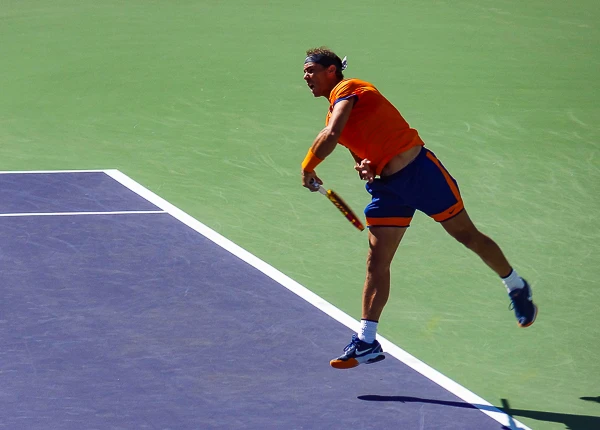
On the women's side, there was much more variety on finals day with Victoria Azarenka the only player to lift the Indian Wells crown twice in a decade. Interesting winners from that era included Vera Zvonareva (2009), Flavia Pennetta (2014), Elena Vesnina (2017) and Bianca Andreescu (2019).
On a more sombre note, the cancelled Indian Wells tournament of 2020 always signifies the beginning of the Covid-19 pandemic for this writer.
It was abandoned on Sunday March 8th with players already on site and qualifying set to start. It would sadly be ahead of the pack as the rest of professional sport soon followed suit.
Since the return of normality on the tennis tour, the superstars of today now take the spoils in the desert. Carlos Alcaraz and Iga Swiatek, two players with heavy spin forehands perfectly suited to the conditions, have already claimed two titles each in recent years.