
Alcaraz becomes eternal in tennis history
It’s not even three years since Carlos Alcaraz nervously cramped his way out of the Roland Garros semi-final. After much hype before the contest, Novak Djokovic handily won in the end, only giving up a couple of games in the final sets to the ailing 20-year-old.
Although the Spaniard was by that stage a major champion, injury issues and the stress that afflicted him during that semi-final raised questions. As I write this piece, Alcaraz has now made as big an impact on the men's singles game as John McEnroe and Mats Wilander. Never mind those questions.
We know and admire Carlos for his cheerful nature and exuberant - at times reckless - play. But it is merely a cloaking mechanism. This 22-year-old has the same core as Rafael Nadal, but his wiring is a little different.
After that crushing defeat at Roland Garros in 2023, Alcaraz recovered only weeks later to beat the seven-time Wimbledon champion on the famed turf. In more ways than one, the Spaniard dethroned Djokovic on Centre Court over five sets.
That core has only toughened in the time since, as the Serb has (slightly) declined with age while the Murcian has flourished. Four more majors have followed since the Championships of 2023 and last weekend, Alcaraz joined the most prestigious of clubs.
At just 22, and for the first time without his long term coach Juan Carlos Ferrero, Alcaraz has already achieved the career grand slam in just 20 main draw appearances. He has won three of the last four grand slams, and five of the last eight. And we now move into his strongest stretch of the season.
Given the quality we have seen him produce at Roland Garros last year, at Flushing Meadows, and then in the Melbourne final, why can't he chase the calendar grand slam? We may have to stop thinking in terms of limits when it comes to the youngest ATP no.1 in history.
Elation for Elena as she grabs major no.2
While Alcaraz exudes playfulness with his mannerisms and style of play, Elena Rybakina is the silent assassin. There's no grunting or histrionics, just a barrage of clean shots until the job is done.
Last Saturday, the Kazakh lifted her game onto another strata as she captured major no.2. After a supreme end to 2025, where she lifted the WTA Finals trophy, this Australian Open was there for the 26-year-old and she duly delivered.
Rybakina dispatched two top five stalwarts in Iga Swiatek and Jessie Pegula before downing the big cheese herself - Aryna Sabalenka - in the final. The Kazakh was formidable across the board, leading the tournament in aces (47) but also near the top on return points won.
We know how good Rybakina can be when everything is flowing, so I was particularly impressed with how she responded to losing the second set in the final.
After a brief moment of panic, she reacquired that deadly calm and took full advantage of Sabalenka's late tension.
After several years of a duopoly atop women's tennis, it's refreshing to see Rybakina join the club of multiple major winners. However, unlike Coco Gauff, Barbora Krejcikova and Marketa Vondrousova, it does feel like the Kazakh has the consistency to really challenge Sabalenka and Swiatek across the season.
The fire still burns in Djokovic
The arc of Novak Djokovic's career is fascinating. He's gone from the underdog against Federer and Nadal, to an extended period as the dominant force in men's tennis, to once again the challenger to more fancied foes.
The steepest task now is to beat both Alcaraz and Sinner, and Novak was closer than I think any of us expected he could get at 38 years of age.
For the majority of his epic semi-final with the Italian, and the start of the final, Djokovic was extraordinarily good. The movement was sharp, service accurate, and the forehand utterly destructive. It was his best level for years.
That level was probably too good to maintain, and so it proved. Facing a man sixteen years his junior but every bit the supreme competitor, Djokovic forced Alcaraz to a level of excellence and the Spaniard duly found it once more.
Final issues growing for Sabalenka
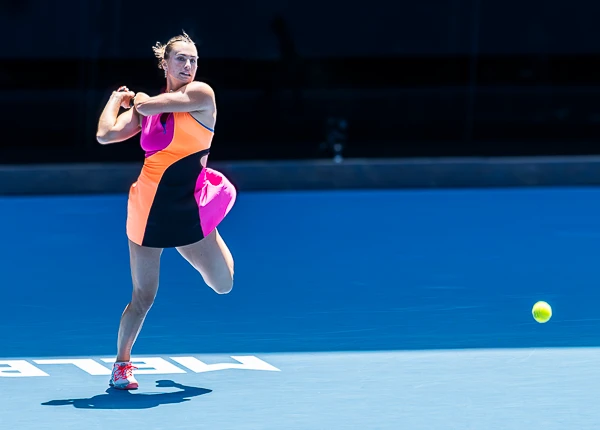
It was a case of deja vu for Aryna Sabalenka in last weekend's final as she lost the first set to a big hitter, recovered well in the second and then saw it slip away in the third. While the Belarusian demolished a racquet after that loss to Madison Keys, the 2026 result may hurt more because she squandered a strong lead.
The world no.1 could not close out from 5-3 in the decider and the Kazakh took advantage. The loss means Sabalenka has been defeated in three of the last four grand slam finals she's played. For comparison, Swiatek has won all six major finals she's contested thus far.
Zverev the nearly man once more
As each grand slam comes and goes, Zverev may well go down as the best player to never clinch one. Not a distinction he will embrace. Since 2024, Zverev has lost five in a row to Sinner, and four of his five clashes with Alcaraz.
Wanting more for less from TNT's coverage
On the TV front, I’m not overly impressed by TNT's coverage and I feel it’s a step down from Eurosport’s offering. While Laura Robson is an impressive lead, I’m not convinced by the chief analyst lineup. I also wasn't impressed with the lack of a full replay for the men's final.
Now too many people want to go to the tennis!
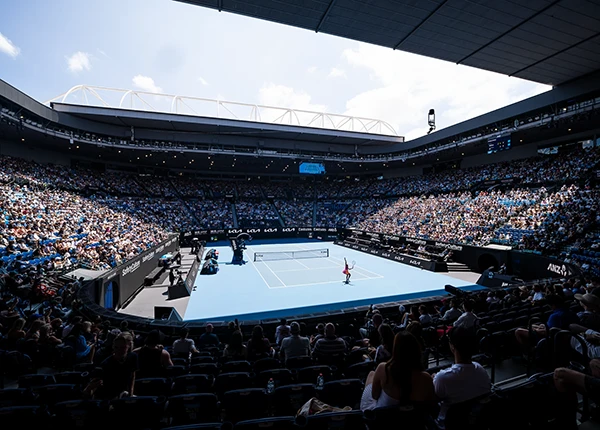
Upon wandering the grounds at Melbourne Park, I found an issue that is starting to blight the grand slams: too many spectators. Now, there are frankly ridiculous queues around the grounds to see certain players. Have we reached capacity where people can comfortably traverse the grounds?