
It’s been a grand slam unlike any I can remember.
Heading into Roland Garros 2026, we had a dominant duo on the men’s side, and four experienced favourites on the women’s. None of them made it to the business end of proceedings.
Instead, we saw first time winners in rising superstar Mirra Andreeva, and the three-time major finalist and champion at 29, Alexander Zverev.
We also had the extraordinary Cinderella story of world no.114 Maja Chwalinska, a maiden final for Flavio Cobolli, and breakout runs from Joao Fonseca, Diana Shnaider, Rafa Jodar, and 17-year-old Moise Kouame.
There was also heat…far too much of it actually for this Irishman! So let’s dive in.
Zverev finally lifts major
Under the game’s spotlight since the age of 17 when he reached the semi-final of Hamburg, Alexander Sascha Zverev has been at the top table of tennis for more than a decade.
He conquered the ATP side of the equation early on with triumphs at multiple Masters 1000s and two ATP Finals crowns. But grand slam runs eluded him for sometime before a semi-final surge at the 2020 Australian Open, followed by that infamous five-set loss to Dominic Thiem in the 2020 US Open final.
Zverev earned two more attempts for major glory at Roland Garros 2024 and last year’s Australian Open, but the new kings of tennis (Carlos Alcaraz and Jannik Sinner) proved too much.
As he turned 29, you wondered if his time as a potential grand slam champion had gone. Then this bonkers edition of Roland Garros arrived in his lap.
With Alcaraz out before a ball was struck, followed by the surprisingly swift exits of Sinner and Novak Djokovic, a perfect situation presented itself to the German.
The unbridled expectation that befell him was not easy, but Zverev comfortably rolled his way through the draw and into the championship match. On Sunday, you could finally see the nerves on show as he struggled to constrain his passive on-court tendencies against Cobolli’s more forthright approach.
But in the end, after all the energy expended by both men in that titanic fourth set, Zverev was able to keep his game together and finally clinch the Coupe des Mousquetaires.
While he is the first male grand slam champion from Germany for 30 years, Zverev's achievement may unsettle some observers. He has been accused of domestic violence by two previous girlfriends though the 29-year-old has repeatedly denied the accusations.
We will have to see whether Zverev can become a consistent foil for the top two, but he no longer holds the moniker of 'best male player not to have won a major'.
Victory for Mirra’s mind
Mirra Andreeva is still just 19, but it seems like we have been talking about her as a potential major winner for years. In truth, we have as the Russian won her first tour match aged 15 and made the last four in Paris only two years later.
While her game has always had that wondrous backhand, the other features have developed in recent years thanks to her application and Conchita Martinez's guidance. Her forehand and serve are more reliable, the net game is sharper, she’s faster, stronger and most importantly…the muscle between the ears no longer holds her back.
We have seen a number of moments where Mirra’s undeniable abilities were hampered by temperamental dips, but a steelier Russian rocked up at this Roland Garros.
I was actually present for the only match where she dropped a set to Marina Bassols Ribera in round two. Andreeva was befuddled then for a while before finding her range and using that superior power to dominate by the end.
It was the same story in the final.
Maja Chwalinska’s delightfully loopy game confused the 19-year-old for a while before she started to properly impose herself on proceedings. In the end, her all-round abilities were more than enough for a first major.
12 years on from Maria Sharapova’s last grand slam title, you can easily see Andreeva matching that Russian’s achievements in the game.
Cobolli illustrates Italian strength in depth
With it being 50 years since Adriano Panatta lifted the Coupe des Mousequetaires (the last Italian male to win in the Bois de Boulogne), it was fitting that he handed out the trophy on Sunday.
Organisers must have thought that a certain world no.1 from the Peninsula would be involved in the championship match. Jannik didn't make it, but an Italian was there nonetheless.
Flavio Cobolli, like his stricken last four compatriot Matteo Arnaldi, benefited from the absence of his nation’s talisman. After the no.1 went out to Juan Manuel Cerundolo, the Argentine was beaten by Matteo Berrettini, who then retired against Arnaldi.
Still, you have to win the matches in front of you and the 24-year-old had a great fortnight. He cruised through the opening rounds and only lost a set apiece against Zachary Svajda and Felix Auger-Aliassime.
In the final, Cobolli started very slowly with an awful, nervy first set. But he rebounded strongly and showed the qualities he has in all departments. There were a few moments where his decision-making went awry, but it was an excellent outing in a first grand slam final.
Cobolli can now confidently move onto the grass court swing, another surface that he has excelled on with that quarter-final run at SW19 last year.
Chwalinska provides rare joy and endless commentary issues
After Lois Boisson’s spectacular ascent from wildcard to semi-finalist at Roland Garros last year, Poland’s Maja Chwalinska outdid that outrageous achievement.
The 24-year-old made history as she entered the event ranked no.114, and made it all the way from qualifying through to the final. She’s the lowest-ranked player to ever make a French Open final and doubled her career prize money in a fortnight.
But more than that, Chwalinska displayed a refreshing, almost bonkers style of tennis. There’s wild shape on her shots, lots of dropshots, some slices, lobs, volleys and anything else you can think of. It’s as if Fabrice Santoro and Dasha Kasatkina cross-pollinated.
Saturday's final, her 10th match of the tournament, proved a step too far. But hopefully this is just the start for Iga's mate. We’ll all just have to do some extra homework on that very difficult pronunciation.
The problem with the world no.1 - Part 1

I don’t think anyone saw Jannik Sinner going out in the second round to Juan Manuel Cerundolo. But maybe there are a couple of factors, specific and general, that could have tipped us off.
First, we have the odd statistic that the Italian has never won a match that has gone four hours or longer. Though that stat includes those recent defeats to Novak Djokovic in Melbourne and the classic 2025 Roland Garros final where he was hardly poor.
More specifically, it may well be an issue of dealing with playing in extreme heat. Paris was unusually hot and humid in the first week, and the man from the ski resort of San Candido probably just finds it more of a struggle than someone who grew up in Florida.
But generally, I also remember how Serena Williams was obviously going to dispatch Roberta Vinci at Flushing Meadows, and Novak Djokovic was destined to beat Daniil Medvedev for the calendar grand slam, and they did not happen.
Nothing is inevitable, especially in tennis.
The problem with the world no.1 - Part 2
While Sinner may be vulnerable to extreme heat, it’s hard to discern what exactly happens to Aryna Sabalenka when she malfunctions in these big matches.
While the Belarusian did not have much of a clay court prep due to a lower back/hip issue, she did win the Sunshine Double in style in the Spring. Then in Paris, she cruised into the second week and played about as well as I’ve seen her against Naomi Osaka in the fourth round.
But in that windy quarter-final with Diana Shnaider, when Sabalenka got within a game of victory, her game imploded. Panic set in as the Russian’s forehand and mindset adapted better to the conditions.
We’ve seen similar collapses from the world no.1, like the final of Melbourne this year and the 2025 Roland Garros decider. Sabalenka maintains an odd dichotomy where she is dominant on the main tour, but quite vulnerable in majors and even finals with just a 55% winning record in title matches over her career.
Rising stars stake their claims
A wacky tournament gave opportunities for others to shine and we saw a number of young players make real breakthroughs.
On the women’s side, Andreeva and Shnaider elevated themselves into a higher strata on the tour as champion and semi-finalist respectively.
As for the men’s, Joao Fonseca fulfilled some of that extraordinary potential with his magnificent victory over Djokovic in the third round. Rafa Jodar also proved that he has the game to compete with the best as he reached the last eight.
Meanwhile, French fans were able to cheer on the explosive rise of Moise Kouame, the 17-year-old wildcard who equalled Rafael Nadal’s record as he made the third round.
Bidding farewell to a titan
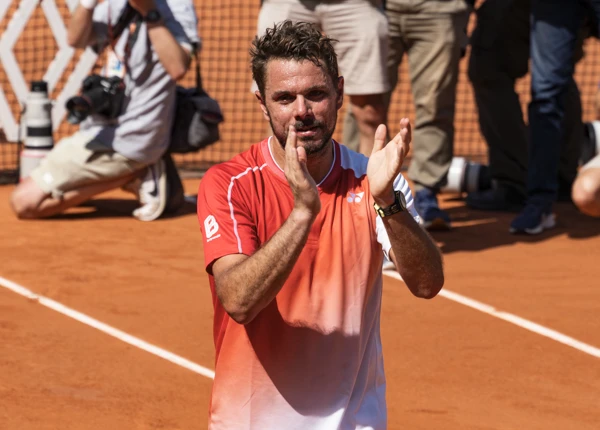
While there was much acclaim for Gael Monfils as he played his last draw at Roland Garros, I was privileged to be on Court Simonne Mathieu for the last stand from Stan the Man.
He of course lifted majors at both the Australian and US Opens, but Stan Wawrinka (and those shorts) will always be synonymous with THAT victory over Novak Djokovic in the 2015 final.
Now 41, the Swiss clearly doesn’t move or play like he once did, but French fans still hold a reverence for Wawrinka on court. He's like a grisled rock star who brought you an album some time ago that you'll always cherish. Give us one more backhand down-the-line!
At his peak, Wawrinka played the game at a level that troubled, and at times toppled, the very best we’ve seen. And it was so damn good to watch.
Don't worry though, Stan will still play some tournaments before the season’s end.
Heat considerations for Roland Garros
While the heat dome that engulfed Roland Garros was unusual, we have become accustomed to rising temperatures from climate change. Two amenities that I was impressed by on my visit to the Australian Open this year would be welcome in Paris.
At Melbourne Park, water fountains are everywhere and there’s rarely much of a queue because of their trough-style layout. Roland Garros does have some taps, but not enough for the size of the crowd and I was stuck in some serious queues for them.
Also at the Australian Open, a sun cream manufacturer simply hands out free sample tubes of their product. No charge, no fuss. It means everyone can get sun protection whatever their income. A super initiative which if it doesn't exist already at Roland Garros, could be added.
TNT coverage is a dud
I have to say I’ve been disappointed with this year’s broadcast of Roland Garros.
I have found it virtually impossible to watch back full matches and it’s all so much messier than when you simply subscribed to Eurosport for the month.
As an old fashioned millennial, I also miss presenters with a strong background in the sport to chair the discussion and link segments. Apart from Laura Robson who’s excellent, I have found the level of questions and engagement with experts like Jim Courier, Mats Wilander and Tim Henman cringeworthy at times.
I miss the days of Eurosport’s old coverage with Barbara Schett and Mats, Amazon Prime, and the halcyon period of Marcus Buckland, Mark Petchey and all the gang on Sky Sports.